

Detection got cheap.
Closure didn’t.
Compressed air is among the most expensive utilities a plant runs, and the U.S. Department of Energy estimates leaks waste 20–30% of a compressor’s output. In five years the floor has filled with acoustic cameras, inspection robots and dashboards that rank findings by severity. The leaks kept leaking. A found leak and a fixed leak are different things, and nearly everything on the market stops at the first.
What it leaves behind is a graveyard of open tickets. Hundreds of findings, none located precisely enough for a technician to walk to with a wrench, and no record of which were ever actually fixed. Your people spend their hours hunting. Your finance team has no proof the maintenance spend stopped the bleed.
Drag to re-scan →3 sources open
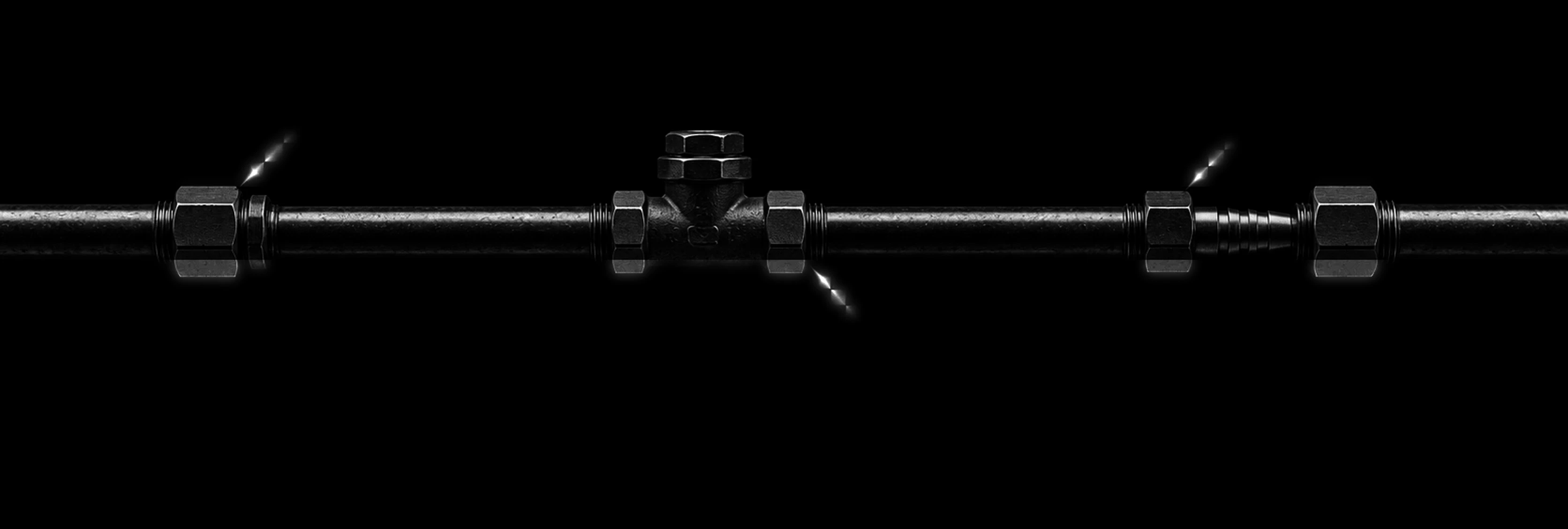
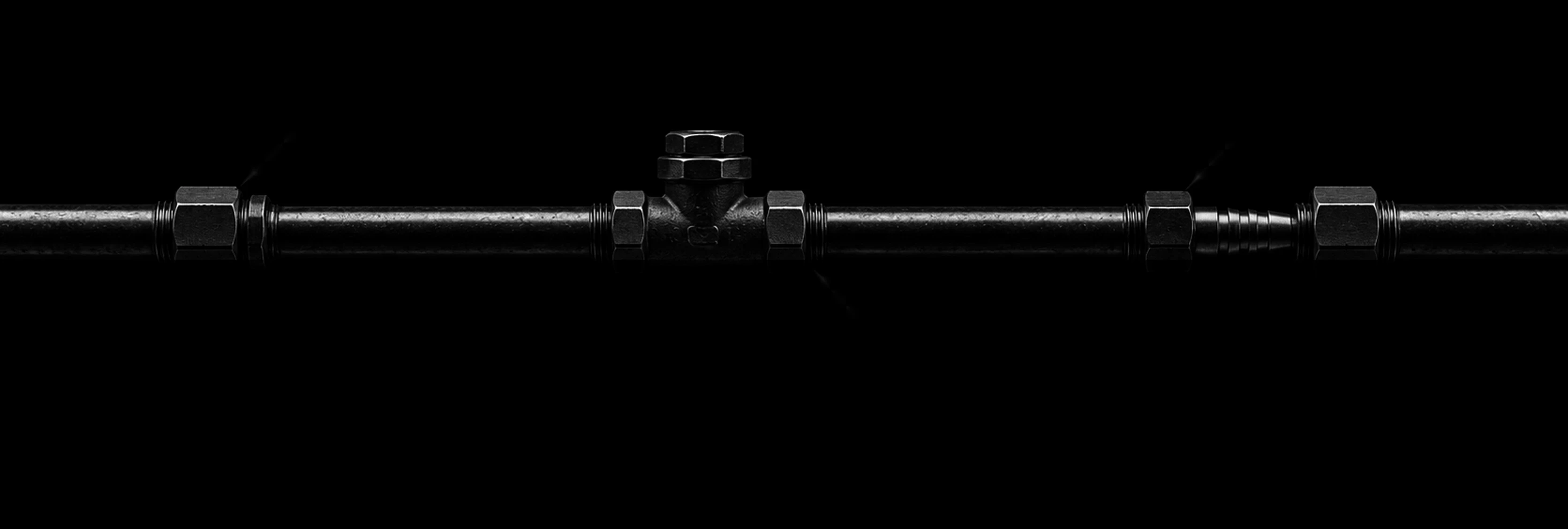
Pl. 2, same pose, same frequency bin, before and after repair. Synthetic illustration.
Our layer closes the loop neither the sensor nor the robot can.
Those tools are commodities. None of them produce the thing that matters, a leak a technician can walk to, a number for what it is costing, and proof the fix took. That is the layer Phonon builds, on top of whatever sensors and robots a plant already runs. The camera finds a direction. The layer turns it into recovered air.
Two things make that layer hard to copy. The first is that it is a measurement problem, not a sensor problem. Locating a leak in three dimensions inside a loud, reverberant floor, separating it from the legitimate air use around it, and estimating its true rate is physics no camera datasheet ships. The second is that it only pays off continuously, not once a year, and continuous listening is only affordable with always-on, event-driven edge compute. That is the part we build ourselves. Spiking neural networks, demonstrated on an FPGA, and a neuromorphic chip as the scaling path.
Three things that have to be true before a leak is worth finding.
The robot is the instrument
Motion is not the dead time between measurements. It is the measurement. On a candidate, the carrier takes a deliberate sequence of poses, and acoustic bearings intersect against a LiDAR-SLAM map. The source is the one that stays coherent across every pose while machine noise does not. Out comes a coordinate a person can walk to, not a blob on a heatmap.
Work orders, not dashboards
A confirmed source should leave as a targeted job in the CMMS you already run, over the MQTT and OPC UA your floor already speaks, carrying its 3D location, its acoustic evidence and its estimated annual cost. Not one more dashboard for somebody to stop watching.
Verification is the deliverable
After the repair the robot returns to the same pose and scans the same frequency bin. The job closes when the acoustic signature is gone, and not before. That verified record, not the heatmap, is the product.
Everything before the last step is inspection.
- Detect
- Locate in 3D
- Work order
- Repair
- Re-scan
- Verified
Only the last step is recovery. A plant doesn’t want to know where its air is going; it wants to show that the spend stopped the bleed. That is a documentary problem as much as an acoustic one, and it is the part the category keeps skipping.
Where this stands today, detection and beamforming run on our own bench. Multi-pose localisation, CMMS integration and the verification record are in development and have not been validated on a production floor.
This is the part everyone else sells.
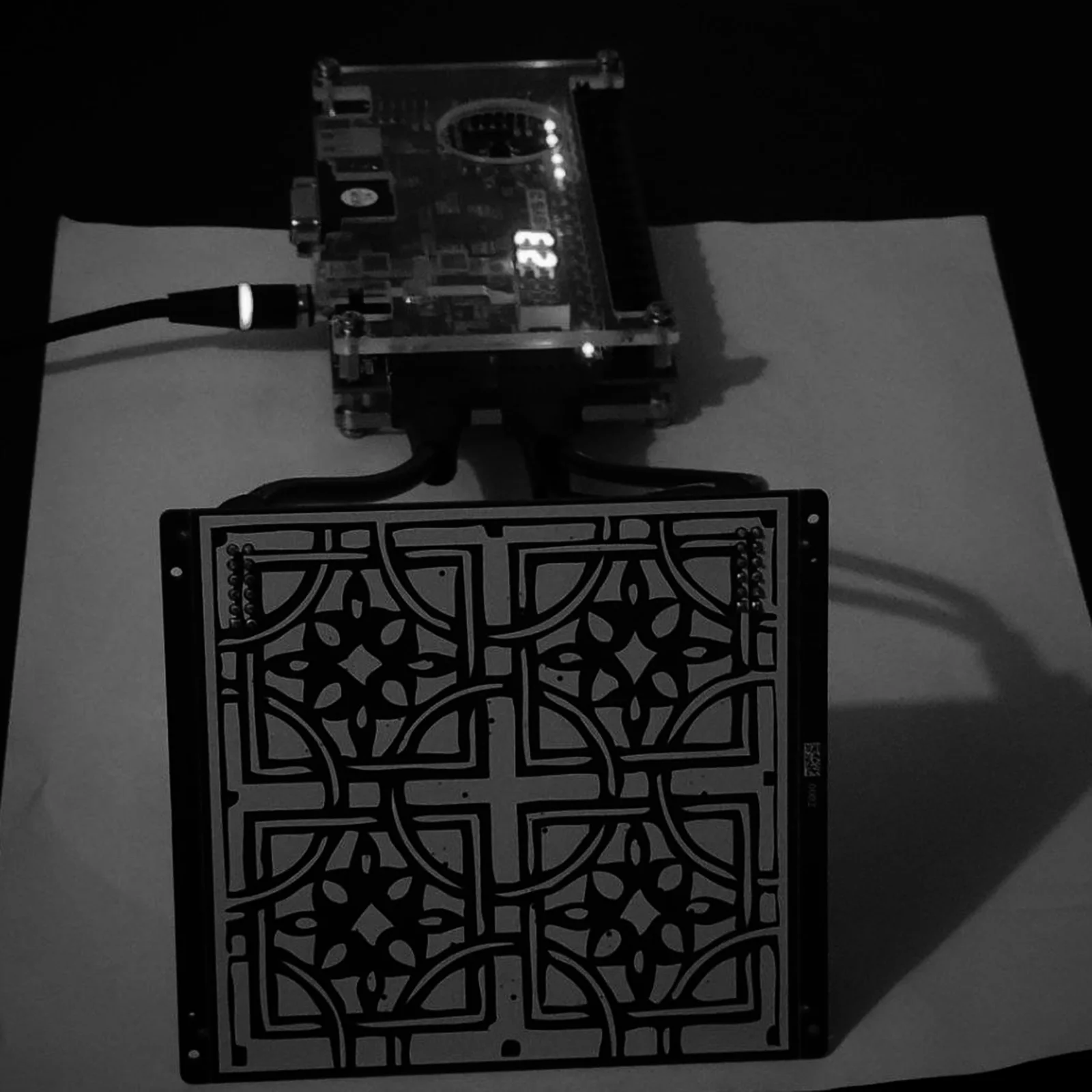
Every acoustic camera datasheet brags about the same thing, microphones in a spiral array, an FPGA running real-time delay-and-sum beamforming, a picture of where the noise is. Ours is thirty MEMS channels on an Artix-7 at a 20 kHz bin, bench-built from an open-source design for a fraction of what a boxed camera costs.
We built it because the metrology engine needs raw acoustic data at full rate, not a vendor’s rendered image. The whole chain, PDM capture through CIC decimation and a single-bin Goertzel to a CORDIC delay-and-sum beamformer, runs on the FPGA. The sensing layer stays modular and sensor-agnostic by design. Whether the sensor is our array or a commercial camera, the intelligence sits on top either way. That is why we don’t describe ourselves as a camera.
- Channels
- 30
- Aperture
- 90 mm
- Target bin
- 20 kHz
- Sample rate
- 62.5 kHz
- Frame rate
- ≈60 fps
- Angular resolution
- ≈11° estimate, λ/D
- Status
- TRL 4
This is the part nobody else sells.
The cameras and the robots are for sale. What makes the layer defensible is the stack underneath, and we keep an honest ledger of where each piece stands.
Event-driven compute
Demonstrated, chip plannedSpiking neural networks running on an FPGA today, with a neuromorphic chip as the scaling path.
Active metrology
In developmentMulti-pose triangulation against a LiDAR-SLAM map, multi-pose coherence to separate the leak from machine noise, and physics-informed leak-rate estimation.
Verification
In developmentA post-repair re-scan from the same pose, the job closing only when the acoustic signature is gone.
Stop finding leaks.
Start proving closure.
We’re early, and we’re looking for pilot sites, plants willing to run closed-loop verification alongside the inspection they already do. If that could be yours, or if you just want to tell us how inspection really works on your floor, we want to hear from you.